Showing posts with label Kathmandu. Show all posts

Sunday, April 27, 2008

Website Review - FM stations in Nepal


The theme for this month is

"24/7 FM stations in Kathmandu, Nepal"


Hits FM 91.2 MHz

www.histfm.com.np


Hits FM is one of the oldest FM stations of Nepal. It is especially recognized for pioneering in music awards in Nepal with the Annual Hits FM Awards. The station is accessible 24/7 online over the Internet as well. The website has quite a busy forum too at www.hitsfm.com.np/forum. Currently, the station is broadcasted in the capital Kathmandu only.


Kantipur FM 96.1 MHz
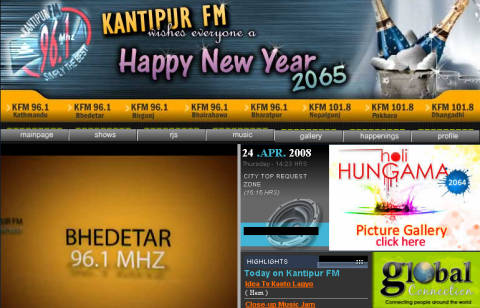
www.kfm961.com


Kantipur FM is another very popular FM station of Nepal. The station is broadcasted to a wide range of audience all over Nepal. With its sister associates as Kantipur Publications, Kantipur Online and Kantipur TV, obviously Kantipur is a powerful brand in Nepal.


Image FM 97.9 MHz

Image FM is also one of the older FM station in Nepal. It is part of the Image Group of Companies and broadcasted to any corners of the country, along with the TV Image Channel. So Image FM has a very large audience from all over Nepal. Image FM also runs its annual music awards in Nepal.


BBC Radio Service 103 MHz

BBC Radio is a part of the BBC World Service in Nepal. Along with the normal BBC programs, BBC Radio in Nepal also features 45 minutes of Nepali programs starting from 8:45 PM NST or Nepal Standard Time (NST = GMT + 05:45). These programs include news, talk shows to drama shows which are produced here in Nepal and broadcasted from within the capital, Kathmandu.


Nepal FM 91.8 MHz

Nepal FM is the latest in the list to be broadcasted 24 hours a day.


Headlines and Music FM 97.2 MHz

Headlines and Music FM is also a relatively new FM station in Nepal. Currently as the name suggests, the FM plays just continuous music followed by brief news every hour.


Some other FM stations broadcasted in Kathmandu (that I am aware of) that are not yet 24/7 are Radio Upatyaka 87.6 MHz ("Radio Valley"), Radio Mirmire 89.4 MHz ("Radio Dawn"), FM Ujyalo 90 MHz ("FM Light"), Times FM 90.6 MHz, Capital FM 92.4 MHz, Gorkha FM 93 MHz, HBC FM 94 MHz (Himalayan Broadcasting Corporation), Metro FM 94.6 MHz, Star FM 95.2 MHz, Voice of Youth FM 96.8 MHz, Keeps FM 98.3 MHz, Radio City 98.8 MHz, Maitri FM 99.4 MHz ("Friendship FM"), Radio Nepal 100 MHz, ABC Radio FM 100.6 MHz, Classic FM 101.2 MHz, Radio Filmi FM 101.8 MHz, Radio Sagarmatha FM 102.4 MHz ("Radio Everest"), FM Paryawaran Chakra 104.2 MHz ("FM Conservation Circle"), FM Adhyatma Jyoti 104.8 MHz ("FM Meditation Light"), Good News FM Radio 105.1 MHz, CJMC F.M 106 MHZ, Radio Audio 106.3 MHz


Quite a long list there! The number of registered FM stations are still increasing in Nepal, so the list will only get longer.


Want to feature your website or blog here too? Drop a mail at nepalsites@gmail.com with some description about your website with the subject line "Website Review".

Sunday, August 12, 2007

Outside Kathmandu - NAGARKOT


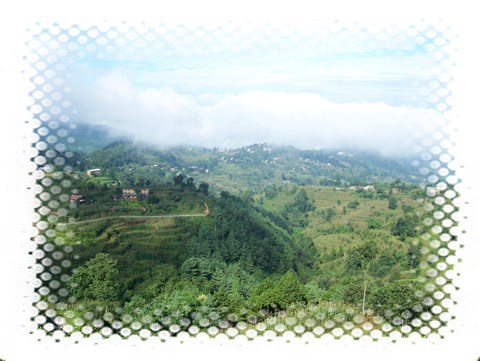
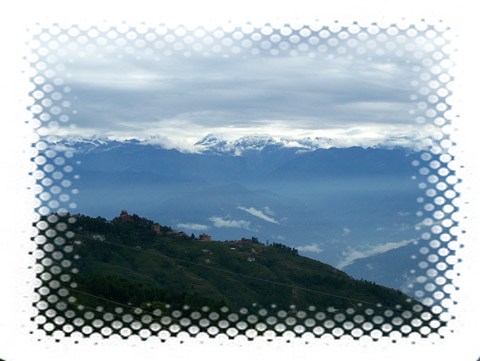
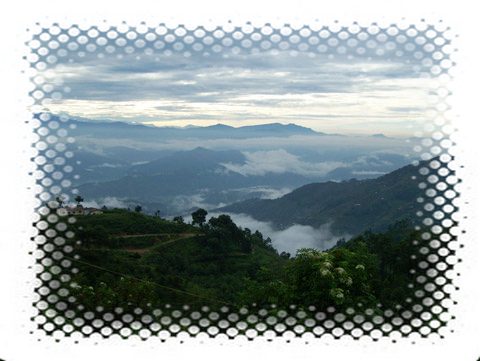
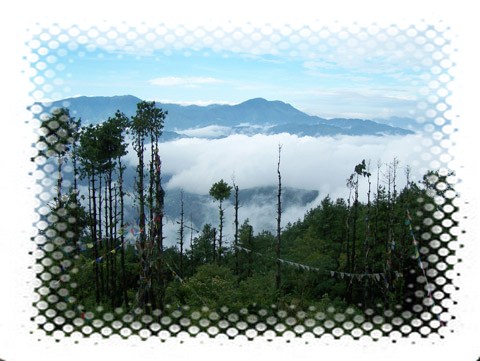
Getting stuck in the streets of city like Kathmandu can be boring at times. Taking a break & climbing up the hills of Nagarkot to watch the sunrise/sunset is one way to relive the life. Unfortunately for us, there was no sunrise to see this time due to rain - but still its worth going up there to catch a glimpse of the Himalayas close up. Many sky topping Himalayas, including the Mount Everest are visible from here on a clear day. And the legendary Bhaktapur isn't very far from here either.


Nagarkot

View from Nagarkot Tower

A view from Nagarkot

Nagarkot Himalayas

Tuesday, February 27, 2007

Kathmandu. Small Town. Too Many People.


I think I'm going to Katmandu
That's really, really where I'm going to
If I ever get out of here
That's what I'm gonna do
K K K K K Katmandu
I think that's where I'm going to
If I ever get out of here
I'm going to Katmandu


Bob Seger (Kathmandu)


I guess that if Bob Seger, who sang 'Kathmandu' back in 1970's, showing his will to come to Kathmandu, would now find that this town is half not as lovable a town as it was then.

Back in the 70's the town had less than two hundred thousand people (or 150402 according to 1971 census). Now the number of heads (assuming all people have heads) must be close to two million if not less. With an estimated population density of 16000+ in 2006, which must be more higher now, the population density in one of the highest in South Asia or the world. In some of the busiest areas in Kathmandu, the density could be 2-3 times higher. You can almost hear the people breathing in the crowd. And it ain't fun hearing strangers breathe as you walk by.

And the sad part is that its not always the people going for work or as such. Most times its just the people on the strikes or the "julus". And then there are people just roaming with no purpose at all. Other times its the never ending queues for gases and oils. Once they start moving there's more trouble. Over two hundred fifty thousand two-wheelers in a small city, and their smokes & noises is more than enough to choke people out.

But then its Kathmandu! Even with all the mess going around, its the best of the lot out here. That's why you can't leave it - I guess.

Friday, January 12, 2007

New Nepal. New way maybe


Not much of a politician, but then we are talking about a new Nepal.

One of the restraining factors in the development of a developing country like Nepal is the fact that the power has been centralized for centuries in the central regions; precisely speaking, the capital, Kathmandu. So the logical way out is to decentralize the power around the country. That's why all the talks about independent states seem logical.

But one major drawback that I feel this would have for a small country like Nepal is while the states may be declared independent, with the major power still existing in the urban areas, the rural areas with lesser resources will always lags behind, possibly drastically. To stop that, we could transfer the central power to a remote location. Or to say we could transfer the power source, or so called the cabinet in Nepal, to a more remote place, or an underdeveloped place. With a simple logic where there is power, there will be development.


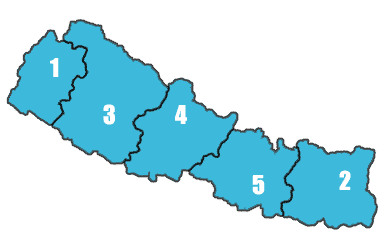
Nepal Map

With the country divided into five development regions, one way ahead would be to introduce a five year initial plan followed by a long term plan, depending upon the five year outcomes. We could then start off with the least developed regions first, hence the far western region. This will be the new power central in the country, with the cabinet, for one year. All the elected candidates will also be shifted in this region for the particular year. For their convenience and adaptation in the new region, there will also be a separate mini cabinet in each development regions, which will be controlled totally by the people within that region only. So there will be five mini cabinets in five regions all this time for the first five year plan. These mini cabinets will be independent of their own and will provide the guidelines for the actual cabinet. Next year the cabinet shifts to region 2, then region 3 in 3rd year and so on.


The mandatory part will be that all the members of the regular cabinet will be relocated to the new region as it shifts there. Meanwhile the other four regions will be continuously monitored and reported by the independent mini cabinets.

Not sure such shifting cabinets are practiced anywhere else in the world, but I feel it will give a better development environment for current Nepal.

PEACE ON!